Academic Advising in Higher Education
Daneiva Allevato
ELCS - Spring 2015


Academic Advising Effectiveness
-
Academic advising is shown to be more successful when advisors hold face-to-face appointments with their advisees. Particularly with topics like future classes, and careers (Halgin 1984).
-
Face-to-face interactions make advising more meaningful for the students (Johnson & Morgan, 2005.
-
Participation in academic advising has been shown to increase student satisfaction and mitigate students’ feelings of isolation or disconnection from the institution as a whole (Fowler, Boylan, 2010).
-
Increases university student retention and graduation rates, and reduces attrition and withdrawal rates. This effect has been documented for both traditional ‘on-campus’ institution (Drake, 2011) and institutions which offer courses and/or entire programs through online/virtual formats (Nolan, 2013).
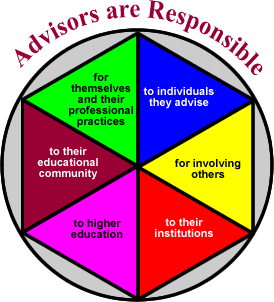
Purpose of Academic Advising
-
Engage in a broader dialogue with individual students to better clarify their academic and personal goals.
-
Help students construct an academic plan which include, selecting classes, registering, and choosing a major.
-
Provide a service to students who are interested in research and study abroad opportunities.
-
Counsel students who are on academic probation or warning.
-
Encourage critical thinking and decision-making skills.
-
Provides students a space where they can discuss their academic concerns and ask important questions.
-
Helps students make educated decisions on classes to take and course planning.
-
Can improve retention rates by guiding students on a path towards timely graduation.